Drivers of Winter Flounder subpopulation catch rates in a fisheries-independent fixed gear survey
Transactions of the American Fisheries Society
Abstract
Objective
This study seeks to better understand the behavior and abundance of Winter Flounder Pseudopleuronectes americanus in subpopulations from three coastal ponds by evaluating catch rates in a fixed-gear survey and accounting for catchability considerations to calculate an abundance index.
Methods
We modeled Winter Flounder catch rates as a function of environmental and sampling factors for a fyke-net survey conducted in three Rhode Island salt ponds over 25 years. The survey deployed fyke nets throughout the winter spawning season in Point Judith Pond, Potter Pond, and Ninigret Pond beginning in the winter of 1998–1999. Sampling variables (e.g., location, soak period) and environmental variables (e.g., water temperature, precipitation) were either collected during the survey or compiled from external sources. Random forest models were used to predict relationships between candidate predictors and the occurrence and abundance of Winter Flounder in the catch.
Results
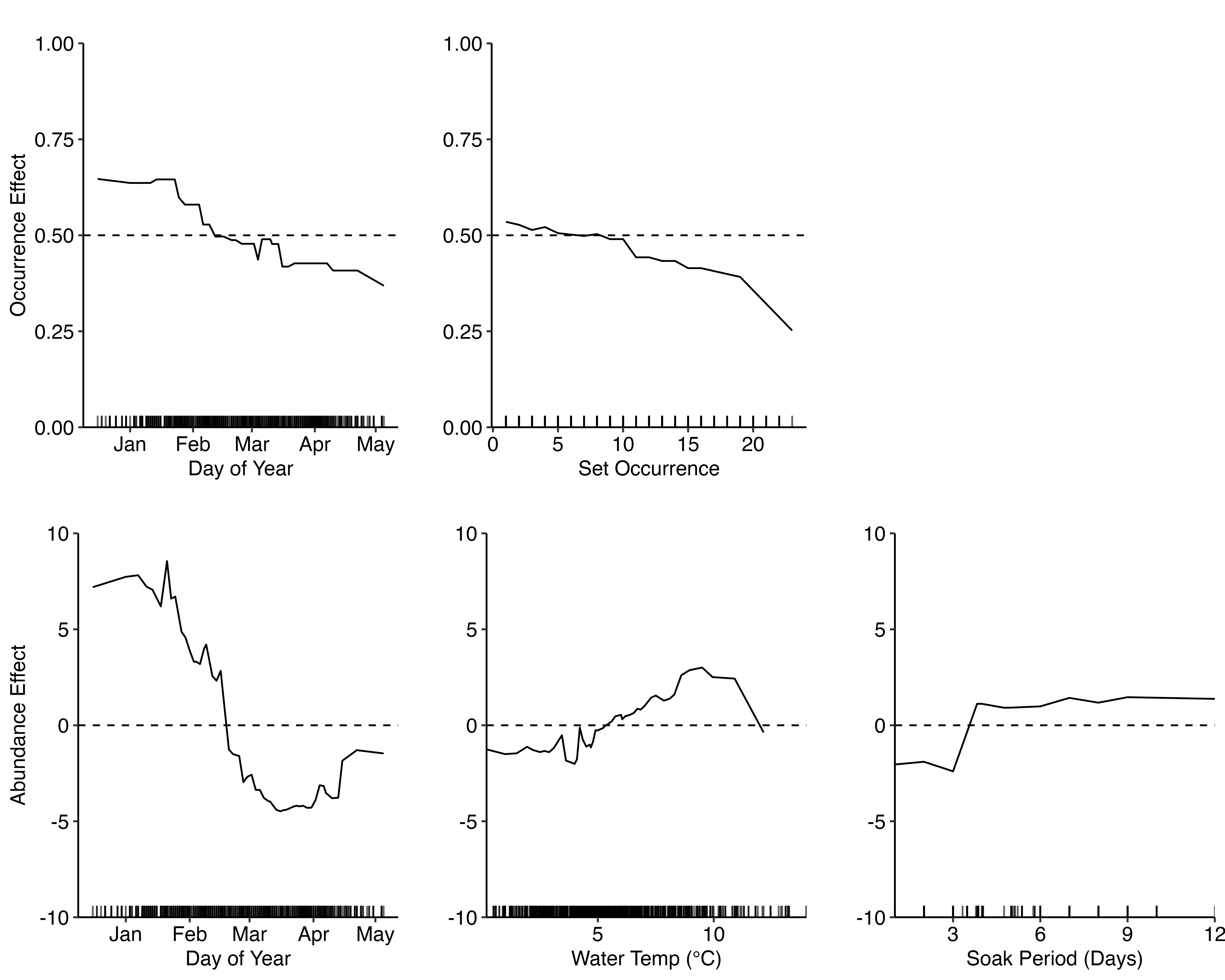
Seasonality (day of year) was strongly predictive of Winter Flounder capture, while most environmental variables were not, suggesting consistently timed migration and spawning movements that do not respond to environmental cues. Water temperature predicted abundance but not occurrence, consistent with previous observations of behavioral adaptations but not taxis during cold periods.
Conclusions
The decoupling of environmental parameters from Winter Flounder catch rates suggests that behavioral rigidity in breeding adults may contribute to this species’ lack of recovery. Improved abundance predictions suggest a continued decline for Rhode Island Winter Flounder.
Access the full article here.